Booking now open for summer!
A closer look at why Spain’s culinary identity evolves without losing its roots—and why California diners are taking notice.
Few gastronomies master the tension between old and new the way Spain does.
While many countries struggle to modernize without losing authenticity, Spanish cuisine evolves seamlessly. From coastal towns to Michelin-starred kitchens, it remains anchored in history yet open to experimentation.
This ability to innovate without breaking tradition is capturing the attention of California diners—especially those seeking technique-driven dishes with cultural depth.
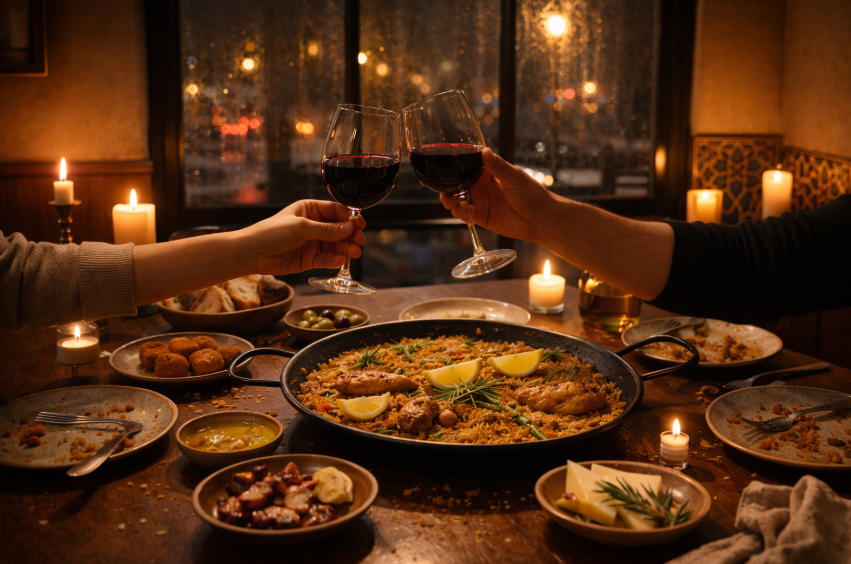
Spanish dishes—paella, tortilla española, croquetas, pulpo—carry centuries of refinement. Chefs honor these roots while adding subtle variations in technique, plating or sourcing.
The result feels modern, never distorted.
Spain relies on a vocabulary of essential ingredients: olive oil, saffron, smoked paprika, garlic, tomatoes, and seafood.
Even in contemporary interpretations, these elements remain present, anchoring every plate to its origin.
Spanish innovation is not about extravagant presentations. It is about precision—heat control, slow cooking, perfect seasoning, and intentional textures.
Innovation comes from mastery, not embellishment.
The Bay Area rejects trends that feel forced. Spanish cuisine resonates because it maintains integrity while still offering freshness and creativity.
Diners increasingly seek dishes that tell a story. Spain’s culinary techniques—coastal grilling, slow braising, charcoal roasting—carry narrative weight.
Balanced flavors, seafood-forward cooking, and vegetable-rich dishes align naturally with California’s health-conscious dining culture.
Puerta del Sol stays faithful to Iberian tradition while adapting to the Bay Area’s demand for refined presentation and top-tier sourcing.
Dishes like paella, grilled prawns, tortilla española and jamón ibérico maintain their original identity while being executed with technical excellence.
Innovation appears in pacing, plating, and ingredient selection—not in altering the soul of the dishes.
As global dining trends shift toward heritage, craft and sustainability, Spanish gastronomy is uniquely positioned to lead.
It offers the rare combination of recognizable tradition and subtle reinvention—an approach that appeals to diners seeking both comfort and sophistication.
In California, this balance is shaping a new appreciation for Iberian cuisine, placing restaurants like Puerta del Sol at the forefront of a movement defined by authenticity and evolution.
Because it preserves core ingredients and techniques while welcoming modern refinements in execution and presentation.
Its reliance on high-quality ingredients, clean flavors, fire-based techniques and centuries-old culinary practices.
Both. It stays rooted in heritage while evolving organically through technique, sourcing and regional creativity.
It matches California’s values: authenticity, freshness, balance, and a culinary experience centered on craft rather than complexity.
By offering dishes grounded in Spanish tradition while elevating them through precision, sourcing and contemporary presentation.
.png)
.jpg)
.jpg)
.jpg)
.jpg)
.jpg)