Booking now open for summer!
Subtitle: A deep look into the technique, timing, and ingredients that define Spain’s most iconic dish.
Paella is one of the most recognized dishes in the world, yet few truly understand what makes it exceptional.
Across California, demand for authentic paella is rising—especially in cities like San José, where diners want technique, not shortcuts.
Spanish chefs know that great paella is a balance of science, timing and restraint. And the secrets behind it are rarely discussed openly.
The golden crust at the bottom—socarrat—is the signature of a proper paella.
It requires precision: enough heat to caramelize the rice, but not enough to burn it.
Most home attempts skip this step entirely, which is why so many paellas taste flat.
Spanish chefs insist on bomba or calasparra rice.
Why? Because the grain absorbs flavor without losing structure.
Long-grain rice, common substitutes, or “whatever is available” simply cannot reproduce the texture of paella.
The broth—not the seafood or protein—is the real star.
A slow-simmered caldo made with saffron, smoked paprika, bones and aromatics sets the foundation. Without it, the dish feels hollow.
Unlike risotto, paella must never be stirred once the rice is added.
Spanish chefs repeat this rule endlessly, yet it remains the most common mistake outside Spain.
Authentic Spanish saffron, artisanal olive oil, seafood sourced with precision and rice varieties imported directly—each component matters.
Spanish cooking elevates heat management into a discipline.
Paella requires shifts in temperature at exact moments, creating contrast between tenderness and socarrat.
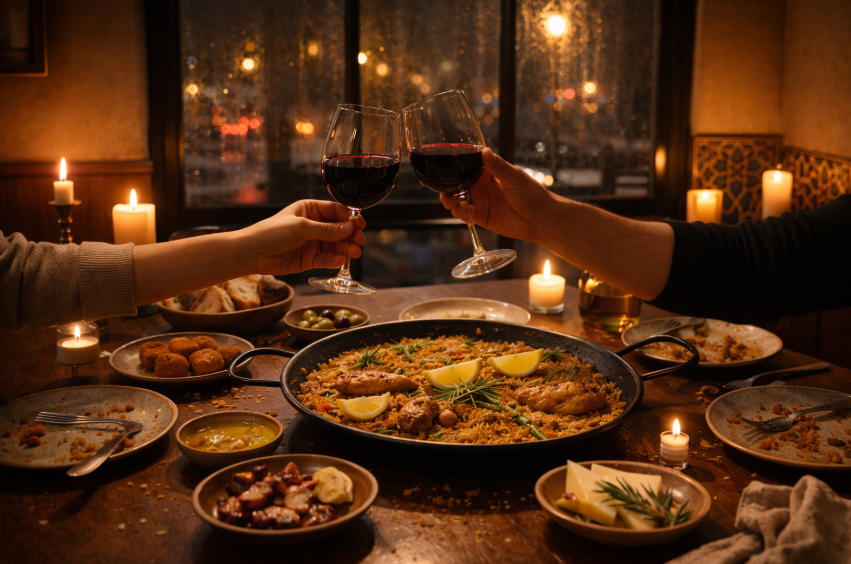
Puerta del Sol approaches paella as a cultural ritual, not as a menu item.
The preparation respects Valencian roots, while the presentation aligns with a refined California dining experience.
The Bay Area’s appreciation for craftsmanship and culinary storytelling makes paella irresistible.
It’s visually striking, technically demanding, and rooted in centuries of Spanish tradition.
When executed well, it delivers depth, aroma and texture in a way few dishes can match.
And that is exactly why authentic paella has become a signature experience for diners seeking something beyond the ordinary.
The use of bomba or calasparra rice, a well-developed broth, proper saffron, and the formation of socarrat.
It adds texture and concentrated flavor, and it signals proper heat management during cooking.
Yes. Traditional Valencian paella includes rabbit, chicken, beans and snails. Seafood variations are popular but not mandatory.
Stirring disrupts the structure of the rice and prevents socarrat from forming.
A wide, shallow paella pan that allows even evaporation and heat distribution.
.png)
.jpg)
.jpg)
.jpg)
.jpg)
.jpg)