¡La reserva ya está abierta para el verano!
The unexpected rise of Mediterranean flavors reshaping the West Coast dining scene
California has long been a testing ground for global culinary trends. But few expected Spanish cuisine to take hold with such force. What began as curiosity for paella and tapas has evolved into a full-scale cultural shift: diners now seek authenticity, tradition, and technique—the very pillars of Spain’s gastronomic identity.
The surge is not driven by marketing gimmicks but by a growing appetite for craft. Californians increasingly value dishes rooted in heritage, prepared with precision, and served without excess theatrics. Spanish food fits that demand effortlessly.
Spain’s culinary philosophy rests on restraint. Olive oil, tomatoes, garlic, saffron, seafood—nothing hides behind sauces or complicated plating. The product is the story.
In health-conscious California, this minimalism feels not exotic but logical.
While fusion dominates much of the state’s dining landscape, Spanish cuisine offers the opposite: clarity. Tortilla española, gambas al ajillo, pan con tomate—recipes that have survived centuries—carry a credibility many modern concepts lack.
Tapas culture resonates deeply with California’s lifestyle. Small plates, long conversations, shared tables. It mirrors the region’s love for community dining and outdoor gatherings.
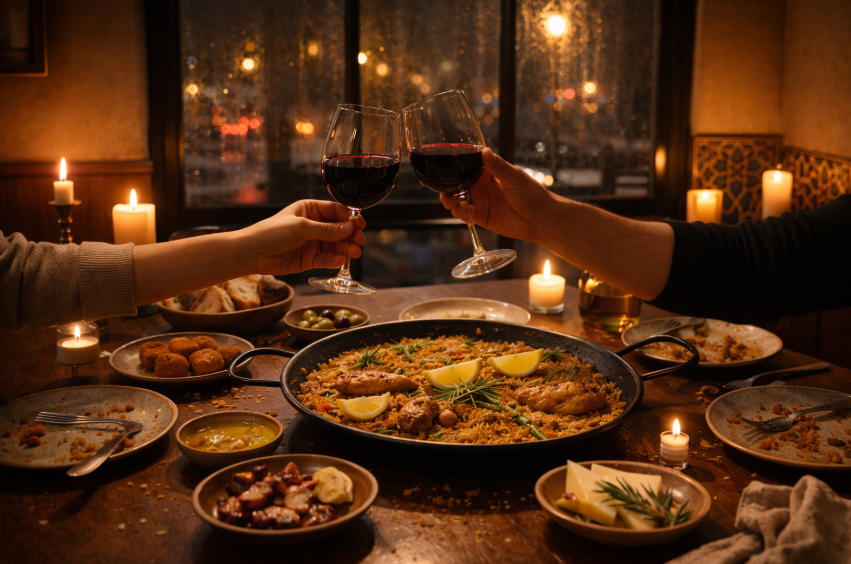
Few dishes symbolize craftsmanship like paella. Real paella—not the buffet version but the fire-kissed, socarrat-driven Valencian tradition—has become a point of fascination.
Its rise reflects a broader trend: Californians are embracing foods that require time and skill, not shortcuts.
Restaurants that cook paella the traditional way—over flame, without rushing—are thriving. The dish has become both a spectacle and a benchmark for authenticity.
Spanish cuisine is not trending because it is new, but because it is timeless. In a market saturated with concepts chasing virality, Spanish food offers stability, structure, and identity.
Three long-term drivers reinforce this:
Spanish cuisine is not competing with trends—it is outlasting them.
Authenticity is now a differentiator. Restaurants that respect Spanish tradition become benchmarks for quality.
Puerta del Sol’s commitment to true Mediterranean technique, rustic craft, and region-specific flavors aligns with the expectations of California’s evolving palate.
In a state that values innovation, the restaurants earning the most trust are often those preserving the past.
Its simplicity, high-quality ingredients, Mediterranean health benefits, and the social nature of tapas align with California’s lifestyle and values.
Yes. Spanish cuisine is rooted in the Mediterranean diet, emphasizing olive oil, vegetables, legumes, seafood, and balanced portions.
Paella represents tradition, regional pride, and craftsmanship. Its cooking method demands precision, making it a cultural symbol rather than just a dish.
Not replacing—but expanding. Tapas appeal to diners seeking variety, shared experiences, and lighter meals.
Commitment to tradition: proper ingredients, regional techniques, Mediterranean cooking logic, and respect for Spanish culinary heritage.
.png)
.jpg)
.jpg)
.jpg)
.jpg)
.jpg)