¡La reserva ya está abierta para el verano!
A closer look at why authentic Iberian flavors are shaping the Bay Area’s dining culture.
California has always been a melting pot of global flavors, but the current rise of Spanish cuisine marks a different kind of transformation. Diners are moving away from overly complex concepts and turning toward food that expresses identity, origin and craft. Spanish cooking delivers all three.
In cities like San José, an appetite for authenticity is accelerating this trend.
Spanish cuisine is rooted in excellent ingredients: olive oil, fresh seafood, aged meats, charred vegetables, and slow-cooked broths. The techniques are traditional, but the results feel modern—clean flavors with depth.
Tapas culture aligns naturally with California dining habits. Groups want variety without heaviness. Tasting and sharing create a social experience that complements the Bay Area’s multicultural identity.
Health-conscious diners are embracing Mediterranean diets. Spain provides a version that feels both balanced and indulgent. Dishes like pulpo a la gallega, tortilla española and grilled prawns offer vibrancy without excess.
San José’s population is diverse, globally connected and open to culinary exploration.
This has created the conditions for Spanish restaurants to thrive. The Bay Area’s demand for craft, tradition and technical cooking elevates the relevance of Spanish gastronomy—especially when executed with precision.
Restaurants like Puerta del Sol tap into this momentum by offering cuisine that is unmistakably Spanish. Not a fusion. Not a reinterpretation. A direct bridge to Spain’s culinary identity.
Online search trends show increased interest in terms like “Spanish tapas San José,” “paella near me,” and “Mediterranean seafood restaurant.”
The pattern is clear: Californians want Spanish flavor anchored in tradition, not trends.
Spanish olive oil, smoked paprika, Cantabrian anchovies, artisan cheeses and fresh seafood establish a baseline of quality.
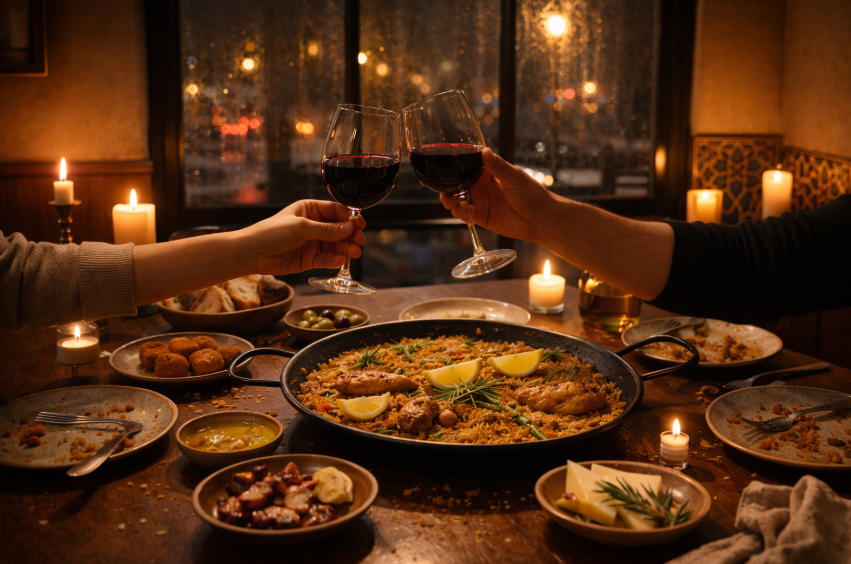
From slow-simmered caldo to perfectly caramelized paella socarrat, technique—not ornament—defines the craft.
The atmosphere, the sequencing of plates, and the structure of shared dishes replicate the rhythm of Spanish dining.
This is what creates loyalty, not novelty.
Spanish gastronomy will continue expanding in regions where diners value authenticity and storytelling.
San José is becoming one of those places. And restaurants that respect the roots of Iberian technique—like Puerta del Sol—are positioned to lead this movement.
Because Californians value authenticity, quality ingredients and Mediterranean approaches to cooking. Spanish cuisine offers all three.
It relies on bold simplicity: smoked spices, seafood, olive oil, charred vegetables and slow cooking techniques.
Yes. Many dishes align with Mediterranean diet principles, emphasizing vegetables, lean proteins and olive oil.
The city’s diverse population and openness to global flavors create favorable conditions for authentic Iberian cuisine.
Paella, tortilla española, pulpo a la gallega, croquetas, gambas al ajillo and jamón ibérico are among the most recognized.
.png)
.jpg)
.jpg)
.jpg)
.jpg)
.jpg)